Reducing Workplace Incidents Through Better Flooring Design
One of the foundations of a safe site is the flooring system. The way a floor is designed and maintained is often the main difference between a productive shift and a workplace injury. In our local industrial landscape, we deal with everything from busy warehouses to frantic commercial kitchens. By getting the flooring design right from the start, you can take a proactive stance on safety rather than just reacting when an incident actually occurs.
The Impact of Slip Resistance
Slips, trips, and falls are actually among the most common causes of workplace injuries across Australia. Beyond the physical toll on a team member, you’re looking at downtime, lost productivity, and a mountain of paperwork.
This is why resin floors have become such a staple in heavy-duty environments. Unlike standard concrete, a professionally applied resin surface provides a seamless, durable barrier that stands up to the daily grind while keeping everyone on their feet.
It provides that essential grip to keep people upright, even when the environment gets a bit chaotic. Epoxy is engineered to provide consistent traction. It means everyone can get on with their job without feeling like they are walking on eggshells all day.
Choosing the Right Texture
One of the cleverest ways to pull incident numbers down is through the use of texture. We often talk about slip resistance in terms of R-ratings. For example, an R10 rating might be spot on for a dry warehouse. However, a commercial kitchen or a food processing plant is a different beast; you might need an R12 or R13 to account for fats and liquids.
Choosing the right grit is always a bit of a balancing act. If the floor is too smooth, it becomes a skating rink the moment a drop of liquid hits it. On the other hand, if it’s too aggressive, it becomes a massive chore to clean.
Thankfully, modern flooring solutions let us find that sweet spot. By mixing fine aggregates into the coating, we create a surface that offers plenty of grip while remaining easy to mop or machine-scrub.
Using Colour for Traffic Management
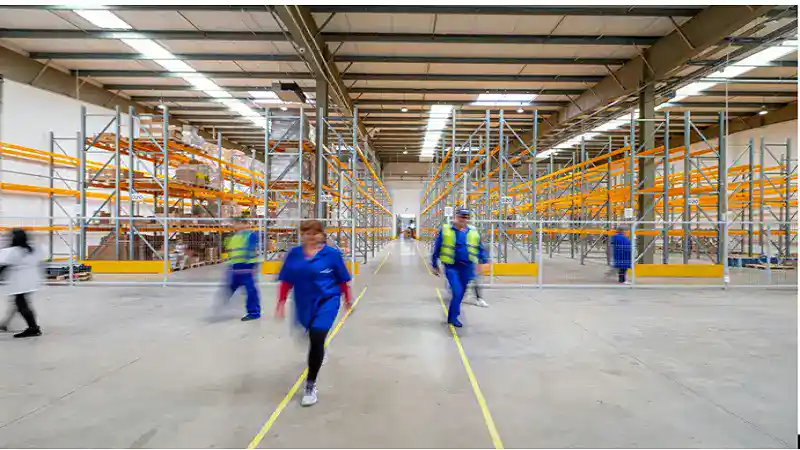
Use different colours and markings to create a visual map of the workplace. This is a brilliant, low-fuss way to keep pedestrians and heavy machinery separate.
By using contrasting colours for walkways, forklift zones, and exclusion areas, you provide instant clarity. This kind of passive safety is great because it doesn’t require constant reminders.
Surface Preparation and Durability
A floor that starts to wear down before its time can become a hazard in its own right. When coatings begin to flake or peel, they create uneven surfaces that can cause slips and falls.
Getting the floor ready before the first drop of epoxy is poured is the most important part of the whole process. Make sure to use diamond grinding to open up the pores of the concrete, ensuring the new coating bonds like it should. This stops the edges from lifting later on.
A seamless floor also means there are no grout lines or cracks for liquids to seep into. In a food-grade environment, this is a big deal for hygiene. It prevents bacteria from moving in and ensures the floor remains a stable, solid surface for years.
Ergonomics and Visibility
Safety is also about long-term health. For those who spend eight hours a day on their feet, the hardness of the surface really matters. While concrete is incredibly tough, it’s pretty punishing on the joints. Some modern polyurethane coatings offer a tiny bit of flexibility. You might not notice it the second you walk on it, but over a long shift, it reduces fatigue.
The finish of your floor also changes how well people can see. In a large warehouse, lighting can be a bit patchy. A high-gloss or semi-gloss coating can help by reflecting the overhead lights, brightening up the entire space. Better visibility means it’s easier to spot hazards or read labels. You just have to be careful not to make it so shiny that it causes glare, but a professional knows how to hit that perfect level.
Long-Term Safety Benefits
Investing in a high-quality floor is a clear sign that a business is looking ahead. It shows a real commitment to the well-being of the staff and the efficiency of the whole operation. When a floor is designed correctly, it becomes part of your safety strategy. It works around the clock to keep people steady, guide traffic, and keep the environment clean.