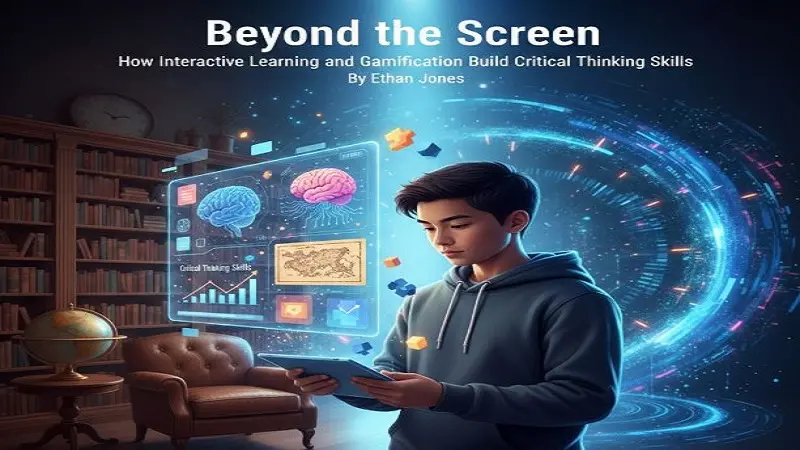
The traditional “chalk and talk” method of education is rapidly becoming a relic of the past. For today’s high school and college students in the United States, sitting passively in a lecture hall for sixty minutes is no longer the most effective way to master complex subjects. As the American workforce shifts toward roles that value cognitive flexibility over rote memorization, the educational landscape is evolving to prioritize interactive learning.
But interactive learning is more than just a buzzword; it is a neurological catalyst for critical thinking. By transforming the student from a spectator into a participant, interactive environments—ranging from gamified simulations to collaborative debates—force the brain to do more than just record data. They force it to think.
In this article, we explore how interactive learning models refine critical thinking skills and why this shift is essential for students aiming for academic and professional excellence in the USA.
1. Moving from Information Consumption to Active Analysis
Critical thinking is fundamentally the ability to analyze, evaluate, and synthesize information. In a traditional setting, students are often rewarded for remembering what the teacher said. In an interactive setting, they are rewarded for questioning it.
When students engage with interactive software or participate in peer-to-peer problem-solving, they aren’t just reading about a concept; they are manipulating it. For instance, a history student using an interactive map to simulate the logistics of the Silk Road must weigh variables, predict outcomes, and adjust strategies. This “learning by doing” forces the brain to move beyond the surface level of “what happened” and dive into the critical “why” and “how.”
2. Enhancing Problem-Solving through Real-Time Feedback
One of the most significant benefits of interactive learning—especially in digital formats—is the immediacy of feedback. In a standard assignment, a student might wait a week to realize they misunderstood a core principle. By then, the “teachable moment” has passed.
Interactive platforms provide instant results. If a student is working through a complex physics simulation and their bridge collapses, they must immediately diagnose the structural flaw.
This iterative process is the hallmark of a critical thinker. It teaches students to:
- Identify errors in logic before they become habits.
- Test new hypotheses in a low-risk environment.
- Refine their approach based on real-time data.
For those struggling to bridge the gap between theory and these high-stakes practical applications, seeking specialized assignment help can provide the extra layer of guidance needed to master the logic behind the task.
3. The Power of Collaborative Argumentation
Critical thinking does not happen in a vacuum; it is often refined through social interaction. Interactive learning models frequently utilize group-based activities, such as “Think-Pair-Share” or structured classroom debates.
When a high school student is required to defend a position against a peer, they are forced to do several things at once:
- Identify the weaknesses in their own argument.
- Listen actively to process a counter-perspective.
- Evaluate the validity of external evidence.
This social “friction” polishes a student’s reasoning. In the USA, where “soft skills” like collaboration and communication are highly sought after by top-tier universities and Fortune 500 companies, the ability to think critically within a team is an invaluable asset.
4. Preparing for the “Critical Thinking Shock” in College
The transition from high school to university in the United States is often a “critical thinking shock.” College professors expect students to enter the classroom with a baseline ability to critique texts and conduct independent research.
Interactive learning prepares students for this jump by fostering metacognition—the ability to think about one’s own thinking. When students are in charge of their learning path—choosing which modules to tackle or how to solve a digital puzzle—they become more aware of their own cognitive strengths and weaknesses.
However, even the most brilliant critical thinkers can feel overwhelmed by the sheer volume of research required in higher education. During these times, leveraging professional academic resources or consulting an assignment helper can provide structured guidance and clarity. We can help students organize their thoughts and ensure their critical analysis meets rigorous university standards.
5. Gamification and the “Strategic Mindset”
When educational content is gamified, it leverages the brain’s dopamine system to keep students engaged, but more importantly, it introduces the concept of Strategic Thinking.
Games and simulations often present “ill-structured problems”—problems that don’t have a single, obvious answer. To succeed, a student must look at the big picture, manage resources, and anticipate future challenges. This type of high-level cognitive work moves the student away from seeking the “right” answer and toward seeking the best solution.
6. Developing Information Literacy in the Digital Age
We live in an era of information overload. A key component of critical thinking today is Information Literacy—the ability to distinguish between credible data and misinformation.
Interactive learning modules often include “web quests” or digital research projects where students must evaluate the bias, authority, and currency of online sources. By navigating these digital landscapes actively, students learn that not all “facts” are created equal. This skepticism is a vital shield in the modern world, helping students become informed citizens who can navigate political, social, and scientific discourse with a discerning eye.
Conclusion: The Future is Interactive
The goal of education is no longer to create human encyclopedias; it is to create human problem-solvers. Interactive learning is the most effective tool we have to sharpen the “critical thinking” blade.
By encouraging active analysis, providing real-time feedback, and fostering collaboration, interactive models ensure that high school and college students are not just ready to pass a test—they are ready to navigate the complexities of the real world.
Frequently Asked Questions
Q.1 How does interactive learning improve critical thinking in students?
Interactive learning shifts the focus from passive memorization to active application. By engaging in simulations, debates, or gamified tasks, students are forced to analyze variables and predict outcomes in real-time. This “cognitive friction” strengthens the neural pathways responsible for logic, deduction, and evidence-based reasoning.
Q.2 What are the best examples of interactive learning for high schoolers?
Effective models include:
- Digital Simulations: Virtual labs or historical recreations.
- Problem-Based Learning (PBL): Tackling real-world issues (e.g., climate change logistics) as a team.
- Structured Debates: Defending a stance against a peer to identify logical gaps.
Q.3 How can students manage the “critical thinking shock” in college?
The jump to university often requires students to critique sources rather than just summarize them. To prepare, students should practice metacognition (thinking about their own thought process). If the transition feels overwhelming, Myassignmenthelp can provide a structured framework for learning how to organize complex, critical arguments.
Q.4 Why is “Information Literacy” considered a critical thinking skill?
With the rise of AI-generated content and information overload in 2026, the ability to verify sources and detect bias is vital. Interactive web-quests and research modules teach students to be skeptical and discerning, turning them into informed citizens rather than passive consumers of data.
About the Author
Ethan Jones is an educator and digital learning strategist based in the United States. With over a decade of experience in curriculum development and educational technology, Ethan focuses on bridging the gap between traditional pedagogy and modern digital tools. His work emphasizes the importance of student agency and the role of strategic play in developing 21st-century cognitive skills. See more